

Why Most Channel Ecosystems Stall and How to Flip the Script
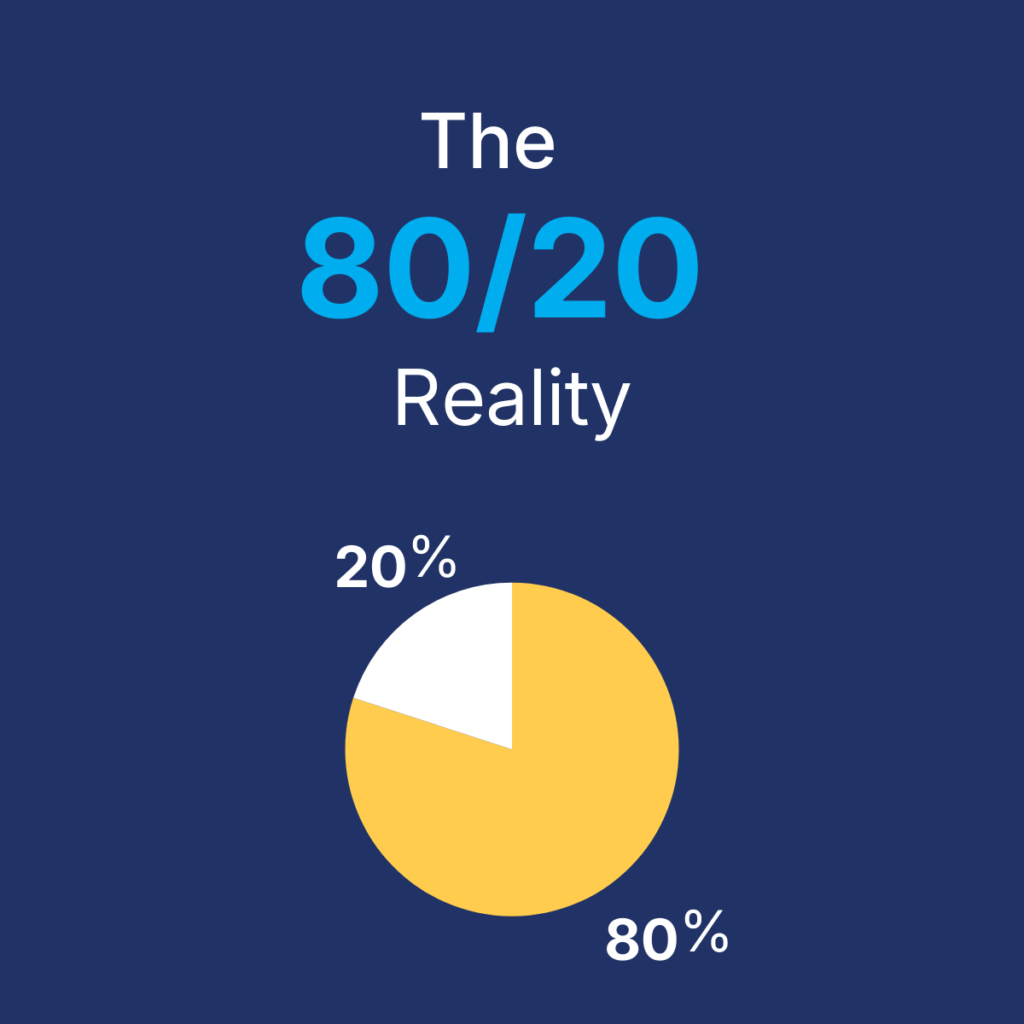
If you recruit 100 partners, roughly 20 will drive meaningful revenue. Five will carry the number. The rest will sit in your PRM, certified and mostly inactive.
Every VP of Partnerships recognizes this pattern. Every CRO has felt it in the forecast. And most partner programs quietly accept it as inevitable.
It is not inevitable. It is structural.
The 80/20 split inside most partner ecosystems is rarely about talent or motivation. It is the predictable outcome of how programs are designed. Enterprise B2B technology companies between $100 million and $500 million in revenue typically have the right infrastructure in place. They run structured partner programs. They have defined tiers, formal onboarding, certification tracks, an LMS, and a PRM. On the surface, the ecosystem appears mature.
Yet revenue concentration tells a different story. A small minority of partners consistently produce. The majority underperform relative to expectations set at recruitment. The issue is not recruitment volume. It is activation depth.
Recruitment creates potential. Activation creates revenue. Those are fundamentally different motions.
Most partner strategies begin with coverage. Expand into new markets. Add more resellers. Recruit additional VARs. Increase logo count. Once signed, partners are trained through product modules, messaging decks, and playbooks. They complete quizzes, earn badges, and unlock tier benefits. The dashboard turns green. Completion rates look strong.
Then sourced pipeline is reviewed, and the same handful of partners account for most of the contribution.
In complex B2B selling, especially when partners own the full sales cycle without a vendor representative in the room, completion metrics are meaningless. If a partner cannot clearly articulate your value, handle objections, and position against competitors in a live customer conversation, certification has not created readiness. It has created compliance. Compliance does not close enterprise deals.
This underperformance is not accidental. It is built into the structure of most programs.
Certification Without Proof
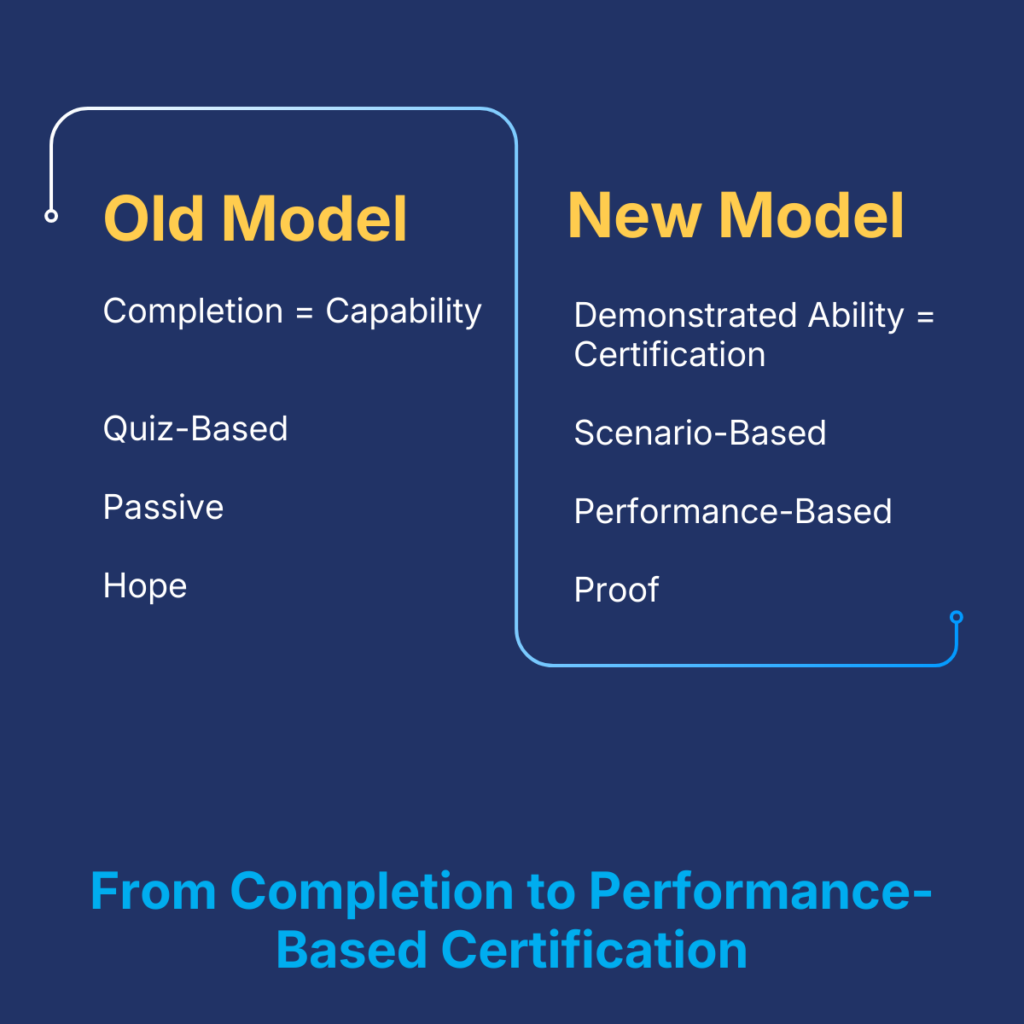
Certification models typically validate content consumption rather than selling ability. Partners watch modules and pass multiple choice assessments. They unlock deal registration or MDF eligibility. But no one verifies whether they can translate that knowledge into a compelling, confident sales conversation.
Two partners can hold the same certification while delivering wildly different customer experiences. One drives revenue. The other creates confusion or defaults to a competitor’s narrative. When everyone passes but revenue remains concentrated, the credential has lost its meaning.
The shift strong ecosystems make is toward performance-based certification. Training becomes input. Readiness becomes proof. Partners must demonstrate they can articulate value in realistic sales scenarios before they are released to sell. Certification becomes defensible, not symbolic.
The Scale Wall
Partner teams are lean. It is common to see five or fewer people managing hundreds of active partners across onboarding, enablement, operations, and performance reporting.
Manual pitch reviews do not scale. Live role plays do not scale. Personalized coaching for every partner does not scale. Faced with capacity constraints, teams lower the bar. Certification becomes a checkpoint rather than a proof point. Feedback cycles slow down. Partners disengage. Time to revenue stretches. Quality becomes inconsistent across regions and evaluators.
The scale wall forces compromise unless the system changes.
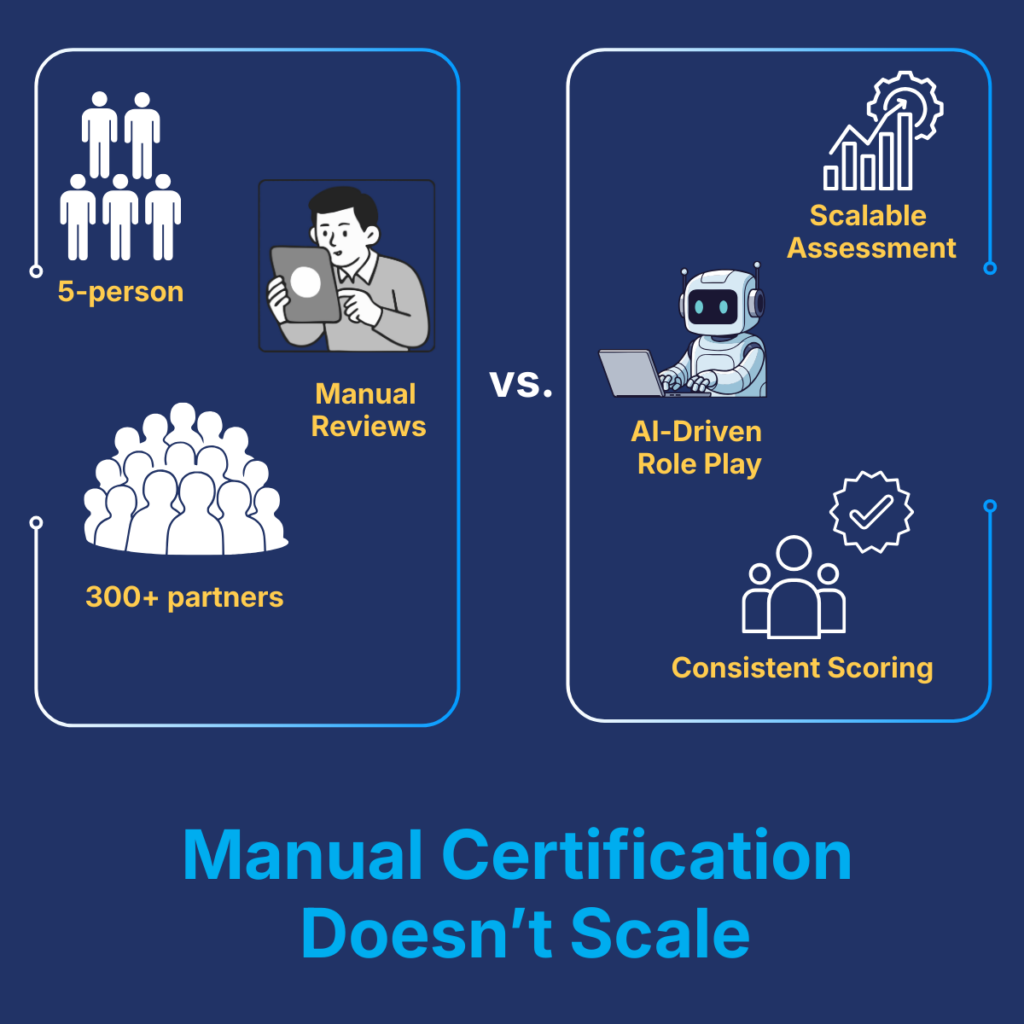
Increasingly, leading organizations are introducing structured role play into their certification process. Through AI partner sales role play, they simulate real conversations and assess selling ability at scale. Instead of hoping partners can execute in live deals, they verify it in controlled environments first.
That is what closes the activation gap.
No Incentive, No Activation
Many ecosystems lack a meaningful forcing function. Strong partner programs tie certification to leverage. Tier access, deal registration, MDF eligibility, and marketplace visibility are gated by demonstrated readiness. Weaker programs rely on goodwill.
Partners are independent businesses with competing priorities. They invest time where it unlocks advantage. If certification does not lead to tangible opportunity, participation drops. If certification does not require demonstrated ability, quality drops. Both scenarios reinforce the 80/20 dynamic.
Certification must mean something. Otherwise it becomes administrative theater.
Revenue Follows Confidence
Most partners carry multiple vendors. When they sit down with a prospect, they lead with the solution they feel most confident pitching. Not necessarily the best product. Not necessarily the highest margin. The one they can explain clearly, without hesitation.
Confidence determines priority. Priority determines pipeline.
The partner you fail to activate is not neutral. They will sell someone else. Revenue leakage rarely appears as an obvious red flag. It appears as underperformance against expectations.
High-performing ecosystems treat readiness as a revenue lever. They implement systems, whether through internal design or purpose-built partner sales certification software, that verify selling ability before revenue is on the line.
Hope is replaced with proof.
What Strong Ecosystems Do Differently
The strongest partner ecosystems refuse to accept this pattern as normal. They design for activation.
They redefine certification around demonstrated ability. They embed structured role play into onboarding. They verify partners can articulate value, handle objections, and position competitively before releasing them into the field.
They build structural ownership across Partner Strategy, Partner Operations, and Partner Enablement. Strategy defines the direction of the ecosystem. Operations ensures scalability and consistency. Enablement ensures readiness and performance.
They treat enablement as continuous. Products evolve. Messaging shifts. Competitive landscapes change rapidly. High-performing ecosystems revisit readiness regularly. They ensure partners are pitching the current story, not last year’s slide deck. They protect mindshare intentionally.
The Business Impact
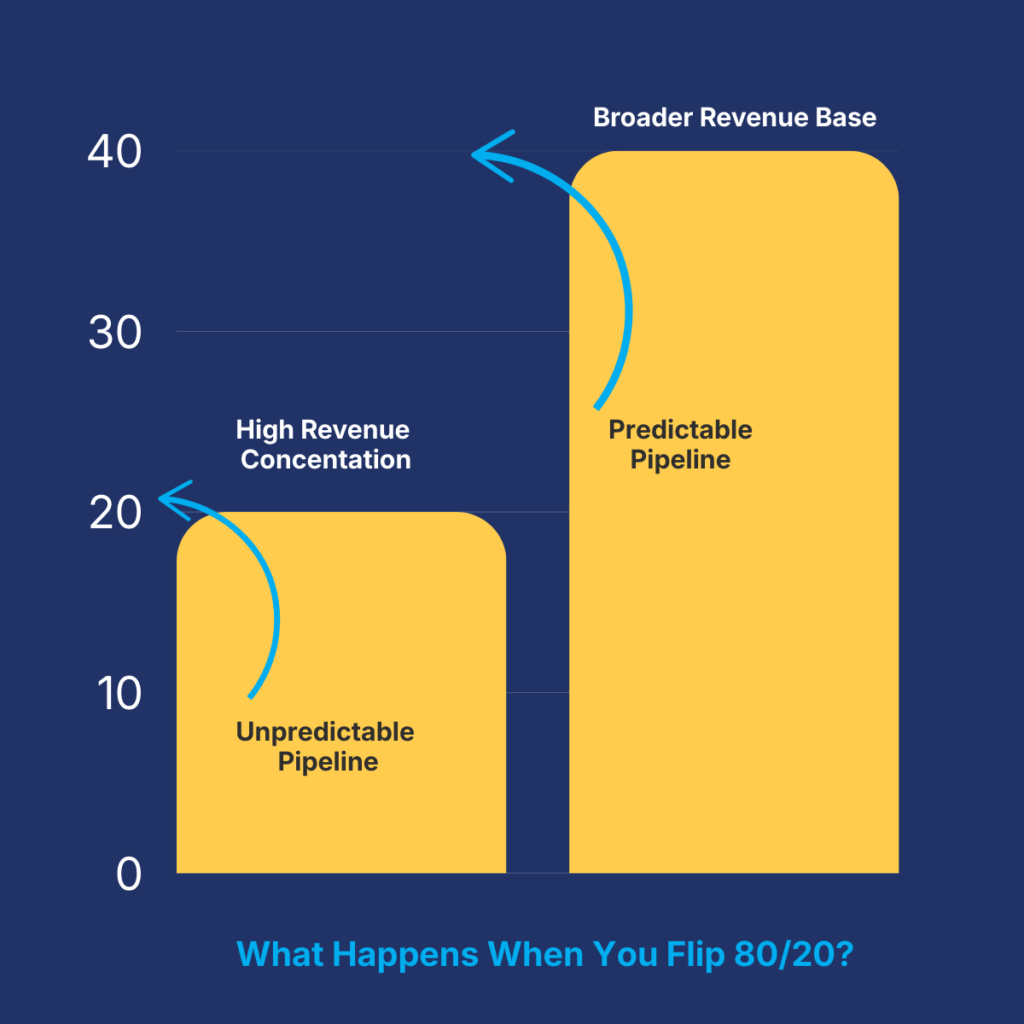
If you move from 20 percent of partners producing to 35 or 40 percent, your channel economics change.
Pipeline becomes more predictable.
Forecast accuracy improves.
Revenue concentration risk decreases.
Growth no longer depends on a small handful of high performers.
For companies in the $100 million to $500 million range, where partner-sourced revenue materially impacts executive planning and investor confidence, this shift matters at the board level.
This is not a training optimization. It is a competitive decision.
In partner-led selling motions where the vendor is not in every room, brand representation is delegated. Your growth depends on people who do not work for you.
Hoping they can sell effectively is not a strategy. Building a system that ensures they can is.
The companies that win the next decade in channel-led growth will not be those with the largest ecosystems. They will be those with the most activated ecosystems. They will stop confusing completion with capability. They will treat readiness as a measurable revenue lever. They will refuse to accept 80/20 as inevitable.
The 80/20 reality is not destiny. It is the result of passive enablement.
Stop managing partners for coverage. Start activating them for revenue. That is how you flip the 80/20 equation and turn your ecosystem into a predictable growth engine.